
Predicate crimes, also called predicate offences, are the underlying criminal acts that generate proceeds which may then be laundered. FATF’s glossary says criminal activity means all criminal acts that would constitute a predicate offence for money laundering in a country, or at minimum those offences required by FATF Recommendation 3. UNODC similarly explains that a predicate offence is an offence whose proceeds may become the subject of money-laundering offences.
In the financial crime environment, predicate crimes matter because money laundering does not exist in isolation. There must first be criminal property or illicit proceeds to launder. Fraud, corruption, trafficking, tax crimes, environmental crime, market manipulation, and many other offences can all serve as the source of dirty money. FATF Recommendation 3 requires countries to apply the crime of money laundering to all serious offences and, at minimum, to offences within the designated categories of offence.
Watch on YouTube: Predicate Crimes
From a professional perspective, predicate crimes are important because they determine what kinds of criminal proceeds an AML framework is trying to detect and disrupt. If a jurisdiction defines predicate offences too narrowly, serious criminal conduct may generate proceeds that fall outside the money laundering regime. FATF’s standards are designed to avoid that gap by requiring broad coverage of serious criminal conduct rather than limiting AML exposure to a few traditional offences.
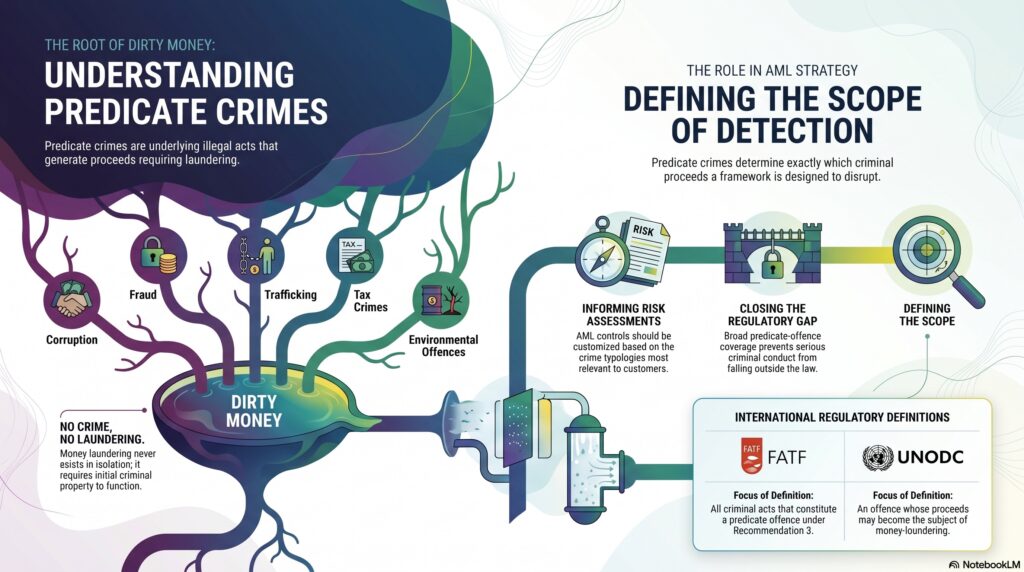
This is why predicate crimes are central to AML risk assessment. A firm is not only looking for “money laundering” in the abstract; it is trying to identify funds that may derive from some underlying offence. In practice, that means AML controls should be informed by the typologies of the underlying crimes most relevant to the institution’s customers, products, and geographies. UNODC’s explanation of money laundering as the processing of criminal proceeds to disguise their illegal origin supports this connection directly.
Ultimately, predicate crimes are the criminal source of laundered funds. They are significant in the financial crime environment because they link the underlying offence to the later laundering process and define the scope of conduct that AML laws and controls are meant to address. Without predicate crimes, there are no criminal proceeds to launder; without broad predicate-offence coverage, the AML framework is incomplete.